A public health approach to policing

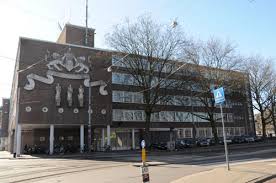
“We have a choice: do we want to be a repressive or supportive service? We recognize all people are equal before the law & must be treated as such & those most affected must lead solutions.” - Asst Commissioner of Amsterdam @Politie addressing police from around world #AIDS2018 On the last day of the 2018 International AIDS Conference held in Amsterdam, I was lucky to join 25 police and civil society leaders from several countries across Sub-Saharan Africa and Southeast Asia on a visit and meeting with the Amsterdam police branch of the Dutch National Police. The meeting was held at the Amsterdam police headquarters. The focus was on what it means to embrace a public health approach to policing. Is this possible? What does it mean for police and society?

Why Declaring ‘War’ on Mexican Drug Cartels Is a Bad Idea

A recent proposal for US Congress to “declare war” on Mexican cartels in order to curb the growing number of fatal opiate overdoses of Americans is incendiary and dangerous. Not only would it be ineffective in countering cartels or reducing fatal overdoses in the U.S.; it would lead to lead to the murders of thousands more Mexican civilians, not to mention endanger the lives of American soldiers.

Harm reduction in São Paulo Brazil – Open Arms / Braços Abertos [Photos]

These are photos from São Paulo, Brazil in June 2016 related to their innovative program Braços Abertos ("Open Arms"). This was a harm reduction effort aimed to provide housing, job training, jobs, income, and health services to street-based crack users known as Cracolândia or "Cracklands." You can read more about the program here, as well …

Criminalized Condoms Force China’s Sex Workers to Make a Difficult Choice

Shasha, a transgender sex worker in China, was stopped on the street one night by the police. Though she hadn’t conducted any business that night, she was hauled to a local precinct for questioning. Once there, the police searched her bag and found lubricant and condoms. Declaring them evidence of guilt, she was immediately sent …

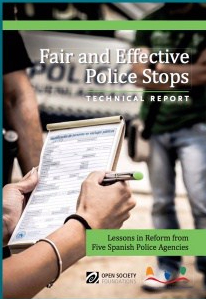
Fair and Effective Police Stops: Lessons in Reform from Five Spanish Police Agencies

Around the world, police departments, policy makers, and communities have struggled to develop best practices that ensure the delivery of both fair and effective policing. Recently, five police departments in Spain undertook an ambitious reform program intended to reduce ethnic profiling and increase the effectiveness and fairness of police stops and searches. Their collective experience shows that change is possible—while also illustrating the challenges and resources required to make change sustainable. Through a series of steps outlined in this report, police agencies reduced the ethnic disproportionality of their stops, increased the effectiveness of stops, while reducing the total number of people stopped, and improved relations with ethnic minority communities.