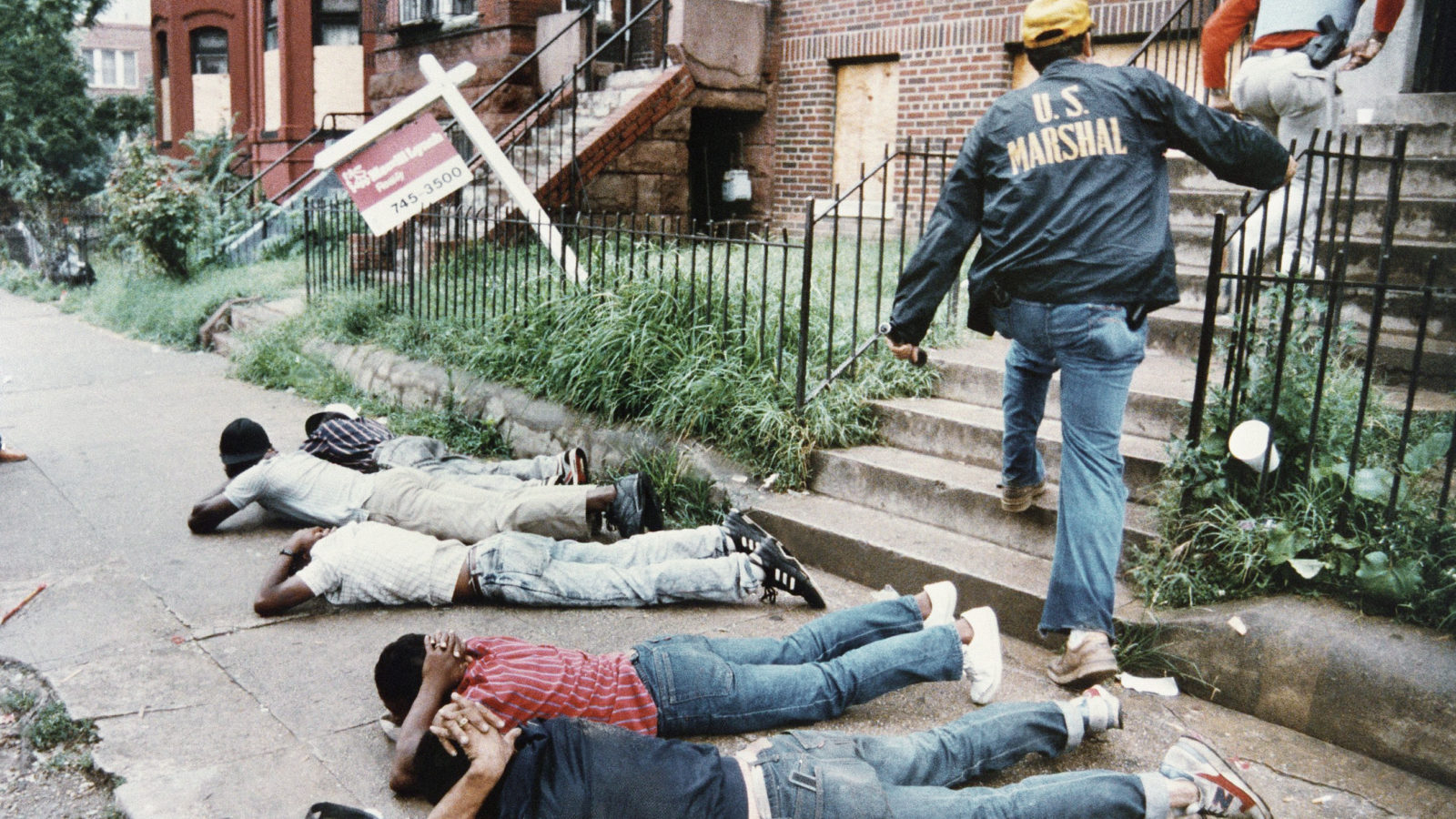
A recent proposal for US Congress to “declare war” on Mexican cartels in order to curb the growing number of fatal opiate overdoses of Americans is incendiary and dangerous. Not only would it be ineffective in countering cartels or reducing fatal overdoses in the U.S.; it would lead to lead to the murders of thousands more Mexican civilians, not to mention endanger the lives of American soldiers.
US declaring “war” on Mexican cartels will increase violence & harm on both sides
U.S. Congress declaring war on Mexican drug cartels will only increase violence & harm to Mexican civilians & will not reduce overdoses in the U.S. Real, evidence-based solutions exist, this is not it. A response to Matt Mayer's dangerous proposal.
It’s time to kick our addiction to the war on drugs
As New Jersey Governor Chris Christie takes the lead in crafting the Trump administration’s response to the opioid crisis, he and his colleagues need to understand that we can’t fix the problem until we kick our long-term addiction to the war on drugs and accept overdoses for what they are: a health issue.
What the Trump Administration Needs to Know about Law Enforcement
Here are four key problems with the Trump administration’s approach to law enforcement that were announced immediately after his inauguration.
Criminalized Condoms Force China’s Sex Workers to Make a Difficult Choice
Shasha, a transgender sex worker in China, was stopped on the street one night by the police. Though she hadn’t conducted any business that night, she was hauled to a local precinct for questioning. Once there, the police searched her bag and found lubricant and condoms. Declaring them evidence of guilt, she was immediately sent …
Continue reading "Criminalized Condoms Force China’s Sex Workers to Make a Difficult Choice"
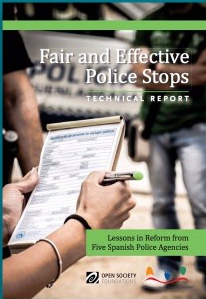
Fair and Effective Police Stops: Lessons in Reform from Five Spanish Police Agencies
Around the world, police departments, policy makers, and communities have struggled to develop best practices that ensure the delivery of both fair and effective policing. Recently, five police departments in Spain undertook an ambitious reform program intended to reduce ethnic profiling and increase the effectiveness and fairness of police stops and searches. Their collective experience shows that change is possible—while also illustrating the challenges and resources required to make change sustainable. Through a series of steps outlined in this report, police agencies reduced the ethnic disproportionality of their stops, increased the effectiveness of stops, while reducing the total number of people stopped, and improved relations with ethnic minority communities.
How the Police Should Use Stop-and-Search Data
Letter to editor originally published in "The New York Times" on December 1, 2014, regarding use of police stop-and-search data to promote fair and effective policing.
Livelihoods, human development and human security: Exploring conceptual differences, similarities and complementarities
This paper, originally published as a chapter in an edited volume, explores the meanings, similarities and divergences of the “human security” concept with other leading conceptual security frameworks for development practitioners, namely “livelihoods” and “human development”. Each serves as the guiding policy and analytical framework for a variety of governmental, intergovernmental and non-governmental agencies. While they hold significant currency within debates, policies and practices of international development, they are less prominent within the peace and security fields, where the concept of human security is better known. Moreover, the meanings of the three concepts – and more precisely their relationships with one another – often remain poorly understood.
Evolving Internal Roles of the Armed Forces: Lessons for Building Partner Capacity
Governments and societies have been contemplating the appropriateness of newly defined or previously secondary purposes for their armed forces, which extend beyond their core role of national defense. These include the assignment of a variety of external and internal military and civilian roles and tasks. Some of these are performed as a subsidiary activity in support of operations under civilian command. An examination of the internal roles of the armed forces in 15 Western democracies shows that armed forces assist in internal security provision mainly as a resource of last resort when efforts are required to respond to exceptional situations. This is the case primarily during and after natural and humanitarian catastrophes as well as other emergencies that exceed the response capacities of civilian and hybrid security institutions. Under the command and control of civilian agencies, the usually subsidiary operations of the armed forces are designed to enhance the capacity of civilian security providers in such situations. What does this mean for armed forces in the developing countries in their indigenous state-building processes? What are the implications for donor nations from the North in their efforts towards “building partner capacity?”
Ferguson, Missouri: Not Just an American Tragedy
The shooting death of Mike Brown by a Ferguson, Missouri police officer and the subsequent stand-offs between protestors and heavily armed law enforcement units might seem like a quintessentially all-American tragedy. But it’s not. Consider the violent rioting that erupted across England in 2011, after police in London shot dead Mark Duggan, a black British …
Continue reading "Ferguson, Missouri: Not Just an American Tragedy"