To reduce crime, enhance public safety, and improve outcomes for people involved with the criminal justice system, we need to follow the evidence. Across the country, we have seen how proactive strategies like summer youth employment programs (SYEPs) have been proven to counter this seasonal crime spike, offer at-risk youth a more constructive path forward, and reduce violence. Moreover, these programs have a lasting effect, helping to bring down crime and violence throughout the year.
My chat with NPR: “Six Republican governors sending National Guard troops to D.C.”
Recently, I spoke with National Public Radio's (NPR) Meg Anderson about President Trump's and various state governors' move to deploy the National Guard in Washington, D.C. Our conversation was long and her segment featured a brief comment about how we may see crime decrease in the short-term but likely not over the long-term. How to best address violent crime is a serious issue that needs serious interventions backed by rigorous evidence. There are already several that we know work.
Understanding Violent Crime and the Policy Responses
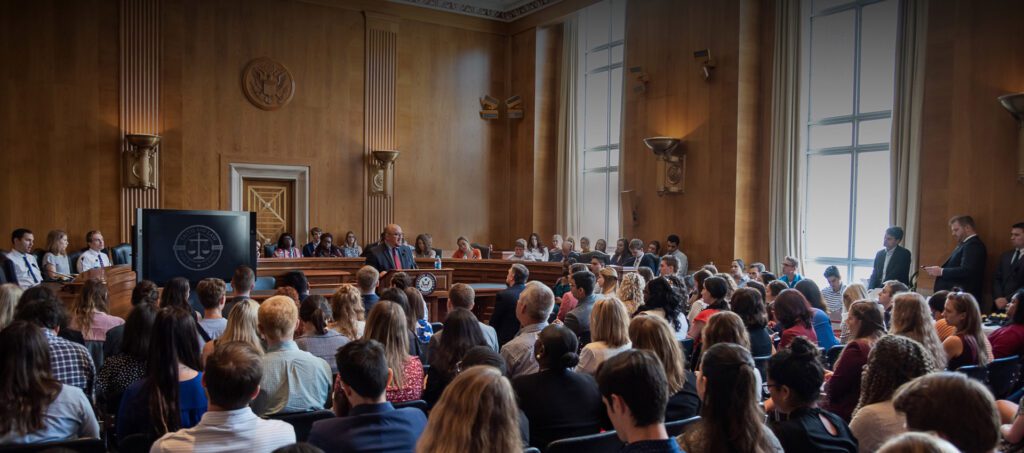
In December, at the end of last year (2024), I had the great opportunity to talk with Congressional staffers on "Understanding Violent Crime and the Policy Responses." The lunch conversation was hosted by Faith and Law in partnership with Prison Fellowship.
States and “Familiar Faces” in the Justice System
Most jurisdictions are home to a small population of people who cycle through the criminal justice and behavioral health systems. With help from the Council of State Governments Justice Center, Georgia and New Mexico set out to address the problem. Happy to talk with Michael Friedrich about the importance of the "Familiar Faces" initiative led by …
Continue reading "States and “Familiar Faces” in the Justice System"
Police accountability is a bipartisan issue. Don’t let it become a prop in our political theater
In May, I co-authored a piece for The Hill with my friend, Jillian Snider - the policy director of R Street's Criminal Justice and Civil Liberties team and a retired NYPD officer. Our piece was in response the political theater underway in Congress to usurp Washington D.C.'s locally-driven police reform bill. Fortunately, while the resolution passed, President Biden vetoed it - upholding D.C. residents ability to seek the type of policing they want - which, as we discuss in this piece included a number of commonsense police reform measures that have been passed in a number of states, including so-called purple and red states.
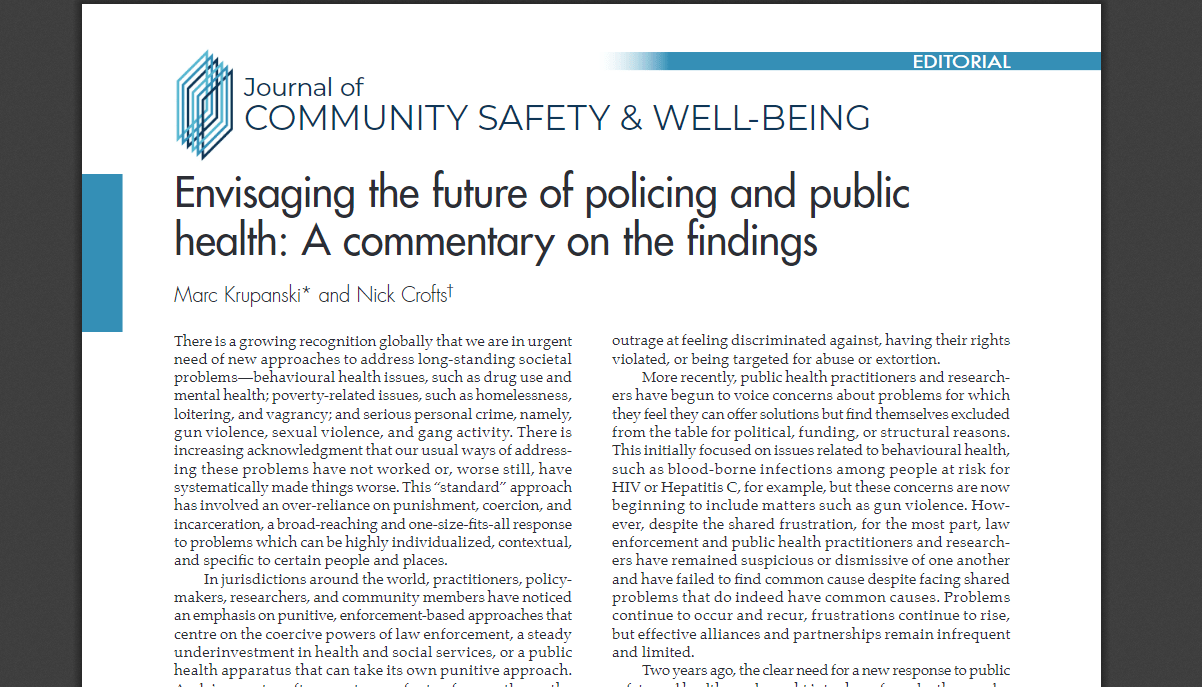
Special Issue Guest Editor: Envisaging the future of policing and public health
I had the great opportunity to partner with Dr. Nick Crofts of the Centre for Law Enforcement and Public Health (Australia) to serve as the Guest Editor for a special issue of the Journal of Community Safety and Well-Being. The special issue, Envisaging Healthy and Safe Communities, shares lessons from a project we led that sought to document and highlight initiatives across the globe that are taking alternative approaches to promote health and safety.
‘We Have Seen What Change Can Look Like’
Two years after the murder of George Floyd, political polarization has stalled a national bipartisan movement for reform even as state legislatures and the White House continue to make progress.
30×30 Initiative: The Unique Value of Women Officers
Research shows that gender diversity can help improve law enforcement agencies and reduce use of force, and the 30×30 Initiative is working to make it happen.
Biden can change federal policing practices and set the floor for policies nationwide
Recently, I published a commentary in the San Antonio Express-News detailing the ways in which the Biden administration can and should utilize its executive authority to enact reforms across the dozens of federal agencies employing over 130,000 federal law enforcement officers. Such an effort would both meet needed reforms in these agencies and set a path for local and state law enforcement.
Policing Reform Continues Even as the Senate Fails
While partisanship doomed congressional action, state-level legislation and White House leadership can still promote accountability and transparency.